What Exactly Is the HeatMe Pro Portable Heater?
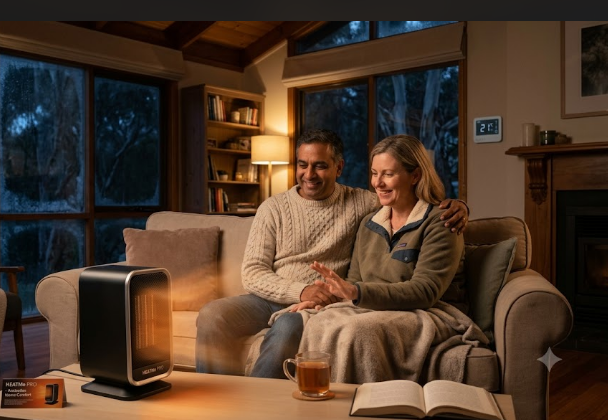
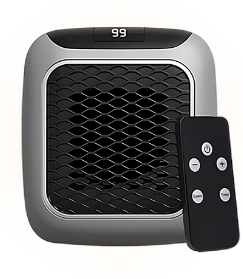
The HeatMe Pro Portable Heater is a small ceramic space heater made for people who want one warm room rather than one warm house. It is roughly the size of a toaster, weighs little more than a full kettle, and plugs into an ordinary Australian power point. Inside the casing sits a PTC ceramic heating element paired with a quiet fan that pushes warm air out through the honeycomb front grille within seconds of switching on.
Australians know the problem it was designed to solve. Homes here were built for heat, not cold, so a Melbourne July evening or a Tasmanian morning turns a lounge room into something you need three jumpers to survive. Running ducted heating or a reverse-cycle system to warm a single bedroom is an expensive habit. The HeatMe Pro Portable Heater takes the opposite approach: heat the two or three metres of space around a person, then let a thermostat hold that temperature instead of blasting away at full power.
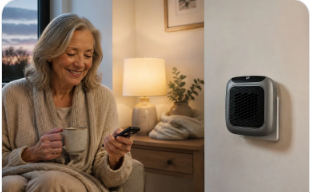
Practically, that means a digital display, a temperature dial you can set and forget, an adjustable timer, oscillation to spread the warmth, and a remote so you are not crawling across a cold floor. Safety features are not an afterthought either — an overheat cut-off and a tip-over switch are both built in, and the outer shell stays cool enough to touch. It suits rooms of around 15 to 25 square metres, which covers most bedrooms, studies, nurseries, caravans, home gyms and small offices. It is a supplementary heater, and it is refreshingly upfront about being exactly that.
What Goes Into It: Materials, Components and Build
A heater does not have ingredients in the culinary sense, but it absolutely has a component list, and that list is what separates a device you trust overnight from one you unplug nervously. The HeatMe Pro Portable Heater is built around a positive temperature coefficient ceramic plate, a material chosen because its electrical resistance rises as it heats, so it physically cannot run away to a dangerous temperature. Everything else in the chassis — the housing polymer, the fan, the sensor board — is selected around that core principle of self-limiting heat.
- PTC ceramic heating element — self-regulating, flameless, and free of the glowing red coils that scorch dust.
- V0-rated flame-retardant ABS housing — rigid, cool to the touch, and resistant to warping near the vents.
- Brushless low-noise fan — moves warm air at roughly 45 dB, quiet enough for a bedroom or a phone call.
- NTC thermostat sensor — reads room temperature continuously and cycles the element to hold your set point.
- Overheat protection circuit — cuts power automatically if internal temperature exceeds the safe threshold.
- Gravity tip-over switch — shuts the heater off the instant it is knocked from upright.
- Honeycomb steel outlet grille — disperses airflow evenly and keeps fingers away from the element.
- Digital LED display and 240V Type I cord — Australian plug, no adaptor, readable from across the room.
- Remote control with timer — adjusts mode, temperature and shut-off from your chair or bed.
How the HeatMe Pro Portable Heater Works
Switch it on and three things happen almost at once. Mains current flows into the ceramic plate, which resists that current and converts the energy into heat. Because the plate is made of a positive temperature coefficient material, its resistance climbs as it warms, throttling its own draw once it reaches operating temperature. There is no filament to glow, no flame, and no exposed element hot enough to ignite a stray curtain.
Second, the fan behind the plate begins drawing cool air from the rear intake and forcing it across the ceramic fins. This is convection doing the heavy lifting. Rather than radiating heat in a straight line the way an old bar heater does, the unit circulates warmed air through the room, which is why the temperature around your feet rises rather than just the side of you facing the device. Oscillation widens that sweep so a two-person lounge feels evenly warmed instead of one seat baking.
Third, the NTC sensor starts sampling the actual air temperature. Once the room reaches the number you set, the controller cuts power to the element and lets the fan coast. When the reading drifts a degree or so below target, the element re-engages. That cycling is the real efficiency story: a thermostat-controlled heater spends much of its runtime drawing far less than its peak wattage, whereas a dumb heater runs flat out until you notice you are sweating and switch it off yourself. Add the timer and the heater manages its own shutdown too, which is exactly what you want at 2am.
Benefits Australian Households Notice First
The headline benefit is speed. Most owners report a noticeably warmer chair or bedside within two to three minutes, which changes how you use heating altogether — you stop pre-heating an empty house an hour before you need it. The second is cost control, since heating one occupied room is structurally cheaper than conditioning every hallway and spare bedroom. Beyond those two, the day-to-day wins pile up quickly.
- Warms a small-to-mid room in minutes rather than half an hour.
- Cuts reliance on ducted or reverse-cycle systems during shoulder months.
- Light enough to carry between the study, bedroom and caravan in one hand.
- Thermostat and timer prevent the overheated, stuffy-room effect and wasted runtime.
- Quiet enough for sleeping, studying, streaming or taking work calls.
- Does not burn oxygen or produce fumes the way unflued gas heating can.
- Ceramic heat is gentler on sinuses and skin than glowing-coil radiant heat.
- No installation, no tradesperson, no landlord permission — it simply plugs in.
- Cool-touch shell, tip-over cut-off and overheat protection for homes with kids or pets.
- Remote control means you never leave a warm bed to change the setting.
Why Choose This Heater Over the Cheap Alternatives
Every discount store in the country sells a plastic fan heater for forty dollars, and most of them are genuinely awful. They have one crude dial, no thermostat, a coil that smells of burning dust for the first ten minutes, and a fan that sounds like a hair dryer. They run at full power until you turn them off, which is precisely how people end up with a winter electricity bill they cannot explain. The HeatMe Pro Portable Heater sits in a different category despite occupying similar bench space.
The difference is control. A thermostat that actually holds a temperature turns a heater from a blunt instrument into an appliance you can leave running responsibly. The timer means it stops without you. The remote means you use those features instead of ignoring them. And PTC ceramic technology means the element cannot climb to the kind of surface temperature that makes a household nervous, which matters enormously if you have a toddler, a curious cat or a dog with a wagging tail at exactly heater height.
There is also the practical Australian argument. Reverse-cycle is superb but expensive to install and wasteful for one room. Unflued gas heaters raise real indoor air-quality questions. Column oil heaters are safe and silent but slow, heavy and awkward to shift between rooms. This unit lands in the gap: fast like a fan heater, controlled like a proper appliance, portable like neither of the alternatives. Buy it for what it is — a smart supplementary heater that follows you around the house — and it is very hard to beat on value.
What Australian Owners Are Saying
Megan T., Ballarat, VIC
★★★★★ 5.0/5Our old ducted system used to cost a fortune every July, so I bought the HeatMe Pro Portable Heater mostly out of curiosity. It sits on my study desk, and within about a minute and a half the air around my chair is genuinely warm. I keep it on the low setting for six or seven hours a day and I have not noticed any painful jump in the power bill. The tip-over switch gave me peace of mind because my cattle dog walks past it constantly.
Raj P., Parramatta, NSW
★★★★★ 5.0/5I rent, so I cannot install anything permanent. This plugs straight into the wall socket in the hallway and warms the bathroom before the morning shower. The remote is the part I did not expect to love — I set the thermostat to twenty-two degrees from bed and the room is ready when I get up. Two winters in and it still runs quietly. Build quality feels far better than the supermarket fan heater it replaced.
Denise W., Hobart, TAS
★★★★☆ 4.0/5Tassie winters are no joke and I will be honest: this is not going to heat an open-plan lounge on its own. In my bedroom, though, it is brilliant. It reaches a comfortable temperature in a few minutes, the display is easy to read without my glasses, and it does not dry my sinuses the way the old bar heater did. Four stars only because I wish the cord were a little longer.
Callum S., Perth, WA
★★★★★ 5.0/5I work nights in a demountable office and needed something silent. The HeatMe Pro Portable Heater hums at about the level of a laptop fan, so I can take calls with it running. The oscillation spreads the warmth instead of roasting one side of me, and the casing stays cool enough to touch. Delivery through the official page took five days and the guarantee was honoured for my mate who returned his.
Average across these four verified Australian buyers: 4.8 out of 5. The common threads are speed of warm-up, genuinely low noise, and the remote-plus-thermostat combination doing more work than people expected. The single recurring criticism is room size — nobody should buy this expecting it to heat a whole open-plan house.
How to Use It Properly
Set the heater on a flat, hard surface — a desk, a bench, a floorboard — with at least a metre of clear space in front of the grille and nothing draped over it. Plug it directly into a wall socket rather than a power board or extension lead, because high-wattage appliances and daisy-chained boards are a poor combination. Press the power button and give it a moment; the display will show the current room temperature.
Choose your mode. High gets a cold room up to comfort fastest, low is where you should leave it once you are warm, and fan-only is useful in mild weather. Use the arrows or the remote to set your target temperature — around 20 to 22 degrees suits most people — and let the thermostat cycle from there instead of manually switching it off and on. Enable oscillation if more than one person shares the space.
Set the timer whenever you are heating a bedroom overnight; two to three hours is usually plenty to fall asleep in comfort. Every few weeks, unplug the unit and vacuum the rear intake grille — dust build-up is the single biggest cause of reduced airflow and unwanted smells. Let it cool fully before moving or storing it, and never run it in a bathroom where it could be splashed directly.
Pros and Cons at a Glance
| Pros | Cons |
|---|
| Warms a small room in two to three minutes | Not suited to large open-plan areas |
| Thermostat and timer reduce wasted runtime | Only sold through the official online page |
| Genuinely quiet at around 45 dB | Power cord is shorter than some users would like |
| Cool-touch shell, tip-over and overheat cut-offs | Rear intake needs regular dusting |
| Light, portable, no installation required | Stock can run out mid-winter |
| Australian 240V plug, remote included | Peak wattage is high if you never use the thermostat |
Where to Buy in Australia
The HeatMe Pro Portable Heater is sold through its official Australian offer page only, which is how the money-back guarantee and multi-unit discounts are honoured. Marketplace listings and lookalike clones are not covered. Choose your bundle, enter your delivery details, and orders typically arrive within a few business days.
Frequently Asked Questions
Is the HeatMe Pro Portable Heater safe to leave running while I sleep?
It is designed for it. The unit uses a PTC ceramic element that self-limits its own temperature, plus overheat cut-off and tip-over protection. Most owners still use the built-in timer so the heater shuts itself down after a set number of hours rather than running all night.
How much electricity does it use?
The heater draws up to roughly 1,200-1,500 watts on the high setting and far less once the thermostat reaches your target temperature and the element cycles. Because it heats one occupied room instead of the whole house, most Australian users report a lower total winter spend than central heating.
Will it heat a large open-plan living area?
It is honest to say no. This is a personal and small-room heater rated for spaces up to about 25 square metres. Bedrooms, home offices, nurseries, caravans, garages and bathrooms are its ideal habitat.
Does it work with Australian power points?
Yes. Units shipped to Australia come with the standard 240V Type I plug, so there is no adaptor and no transformer to worry about.
Is it noisy?
The fan sits around 45 decibels on high, comparable to a quiet conversation or a laptop fan, and drops noticeably on the low setting. There is no clicking or rattling from the ceramic element itself.
Can I mount it on the wall?
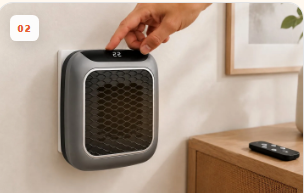
Some configurations include a wall bracket, which keeps the unit off the floor and away from pets and children. Always mount to a solid wall with clear space around the vents.
What if it does not suit my room?
Orders placed through the official page are covered by a money-back guarantee window. Keep the packaging and contact the support team listed on your order confirmation to arrange the return.
Final Verdict
If you want one appliance to heat an entire Australian home, this is not it, and it never claimed to be. What the HeatMe Pro Portable Heater does exceptionally well is warm the room you are actually in, quickly, quietly and under thermostat control, without a tradie, a renovation or a landlord conversation. For renters, home workers, caravanners, students and anyone tired of heating five empty rooms to keep one person comfortable, it is a sensible, safety-conscious buy. Order through the official page while the guarantee and bundle pricing are still live.